This guide explains how Commercial Electric Car Charging Points Installation works for businesses, from planning and site surveys to electrical design, permitting, commissioning, and ongoing maintenance. It objectively outlines what “commercial charging points” typically include, why hardware choices matter, and which operational requirements drive total costs and timelines.
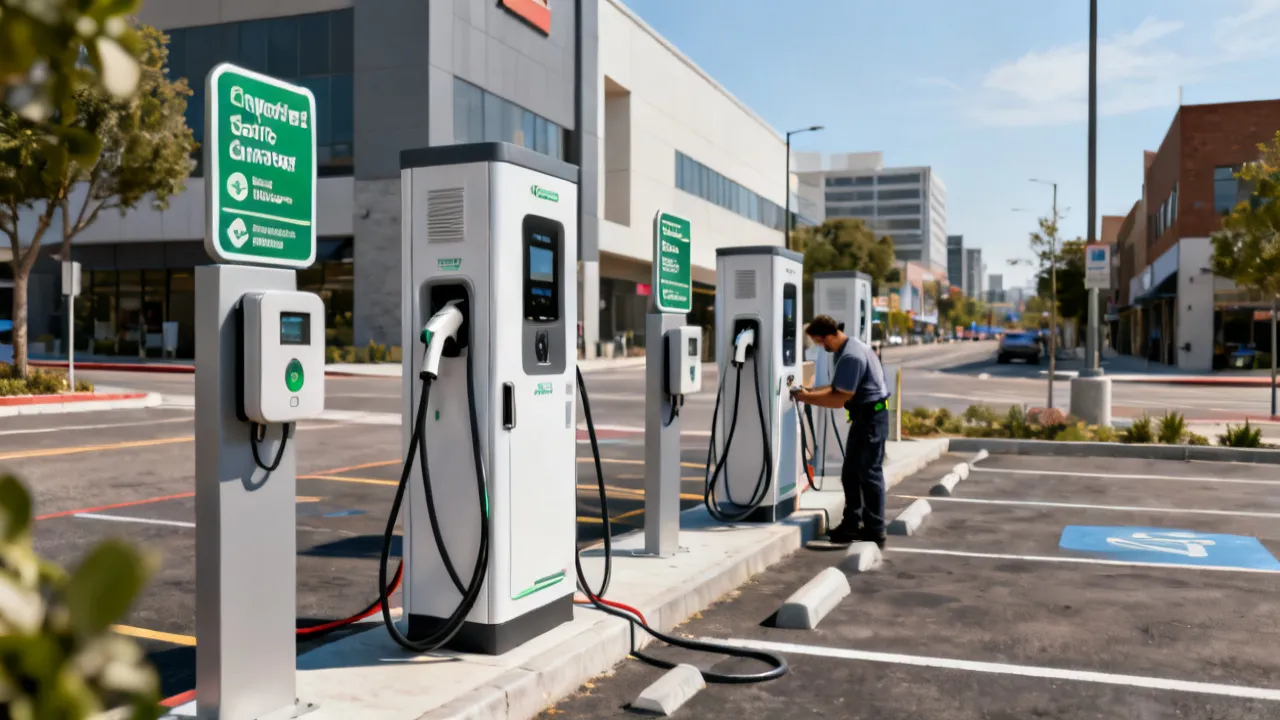
Commercial electric car charging points installation is a structured project that rewards disciplined planning and strong execution. You typically start with site planning and electrical capacity checks, then move through detailed design, permitting, hardware selection, and coordination for any grid connection requirements. After that comes civil and electrical installation, followed by final commissioning, acceptance testing, and a maintenance-and-operations handover. Only once those steps are complete can you treat the charging points as a dependable business asset rather than a temporary technology trial.
From an industry perspective, the very successful deployments don’t begin with buying chargers; they begin with understanding real-world usage patterns, electrical constraints, and the compliance pathway. Whether you manage a retail car park, a hotel forecourt, a fleet depot, a multi-tenant office estate, or a mixed-use development, the installation approach should be tailored to your location’s grid conditions, your customer experience goals, and the realities of running a site without major disruption.
For businesses, “the critical path” is the sequence of activities that determines overall timeline risk. In charging infrastructure projects, the critical path often includes electrical design finalisation, utility engagement (where upgrades are needed), civil works scheduling, equipment lead times, and commissioning availability. If any of those slip, the project can drift—sometimes into peak business seasons or months when civil reinstatement conditions are less favourable.
In commercial environments, charging points become customer-facing infrastructure and an operational dependency. A charger that installs correctly but is poorly integrated can produce nuisance faults, underperform when multiple vehicles charge simultaneously, or fail compliance tests and require costly remedial works. Even when failures seem minor—like intermittent disconnects, fault indicators, or reduced power delivery—those events translate into downtime, reputational harm, and staff time spent addressing escalations.
Three factors consistently shape long-term outcomes:
Businesses sometimes try to compress schedules by skipping detailed electrical design or by using placeholder assumptions about cable routing and protection devices. That can backfire. In commercial deployments, the difference between a “works on day one” installation and a “works reliably for years” installation is often the quality of design calculations, installation workmanship, and commissioning discipline.
Additionally, installation quality affects operational cost. If you choose a configuration that later requires trenching again to add spare capacity, you pay twice: once for the initial works and again for the rework. Conversely, if you plan conduits, reserve space in distribution equipment, and design with future expansion in mind, the incremental cost of adding more bays later is often dramatically lower.
Commercial electric vehicle infrastructure differs from residential charging primarily due to scale, duty cycle, and operational expectations. A domestic user may accept an occasional inconvenience if a charger faults. In contrast, commercial operators are managing customer expectations, contractual service levels (sometimes implicitly), safety compliance for public access, and the reputational impact of downtime.
Many commercial sites require:
When stakeholders in retail and hospitality talk about “uptime,” they usually mean more than “it powers on.” They mean predictable availability, safe fault handling, and sensible recovery processes. Customers also expect intuitive use—clear signage, correct connector management, and bays that are physically usable in typical weather conditions and vehicle sizes.
Furthermore, commercial charging can involve multiple user groups with different priorities: staff, customers, guests, delivery vehicles, and possibly disabled users requiring accessible parking bays. Designing for those realities often requires a more holistic approach than merely selecting a charger model.
An expert installation plan generally follows an end-to-end sequence. Skipping steps might reduce early effort, but in commercial projects it usually increases change requests later—especially when the network connection, civil scope, or commissioning tests reveal previously unaccounted constraints.
In practice, these phases overlap. For example, while the civil team prepares routes and reinstatement areas, the electrical design team may finalise the protection device selection and test plan. The key is that assumptions are frozen early enough to avoid waste during installation.
Your charger choice directly impacts electrical design, site works, commissioning workload, and future expansion flexibility. Commercial deployments commonly include:
Industry practitioners often recommend starting with a realistic view of dwell time and usage. A site where vehicles typically spend 2–3 hours parked may provide a great customer experience with AC chargers configured for reliable availability. In contrast, fast-charging bays can be valuable when dwell time is shorter and throughput is important.
However, fast charging complexity is not only about “bigger cables” or “more power.” It’s also about system behaviour under high load: voltage stability, protection coordination, and the ability to manage faults and reset conditions quickly. In some cases, businesses underestimate how grid upgrades can affect the schedule. Network lead times can vary, and the documentation requirements can add months if the process is not handled early.
Another practical factor is the installed base strategy. Businesses may initially deploy a small number of bays but plan to expand. In that scenario, AC chargers with smart power sharing can offer a flexible route to scaling, while the decision about DC fast charging may need a more strategic review of grid capacity and site readiness.
Commercial operators frequently discover that actual demand patterns differ from the assumptions used during early budgeting. Spreadsheets often model charging as uniform or statistically predictable. Real life adds variables: events, seasonality, shift changes, promotions, weather impacts, and even competitor behaviour that changes what customers do.
For example, a retail site may see peak demand during weekend shopping hours. A hotel might see high usage during check-in and early evening. A business park might observe spikes when multiple tenants have staff arriving simultaneously. If those peaks exceed planned simultaneous demand, the chargers may throttle, or the system may require load management to remain within contracted limits.
To prevent this, a robust installation plan includes:
This is also where an experienced installer can materially reduce risk. They treat the chargers as a system—integrated with site electrical constraints, user behaviour, and operational recovery paths—not as isolated devices bolted to the wall.
Designing “for a spreadsheet” often shows up later as user dissatisfaction. If power delivery is inconsistent due to poor load management configuration, customers feel it immediately. If a bay layout results in frequent cable snagging or difficult access for certain vehicles, those issues become recurring operational problems.
Even when charger hardware appears straightforward, the installation’s electrical design is where performance and safety are determined. A well designed electrical solution ensures both protection of people and equipment, and stable charging behaviour across a range of operating conditions.
Key items include:
From an industry expert’s viewpoint, this is where scope discipline matters. A well-scoped design reduces surprises during procurement and installation. For example, cable containment and reinstatement requirements can be underestimated if the electrical design doesn’t specify the physical route from the distribution equipment to each charger location.
Electrical design should also consider service access. If a distribution board is difficult to access later, adding chargers or replacing a damaged section can become costly. Similarly, if the system includes load sharing and metering, the design should ensure the monitoring points are accessible and configured correctly during commissioning.
Another commonly overlooked factor is voltage drop and cable length. Even if the cable is technically sized to carry the required current, long runs can cause voltage drop that reduces charging power or triggers protection mechanisms. In commercial deployments, where site layouts may be complex and bays spread out across car parks, voltage drop calculations can be essential.
Commercial electric car charging points installation is not just a technical job—it’s a compliance project. Requirements vary by region and local authority, but nearly all deployments involve a combination of electrical safety compliance, site permissions, and coordination with relevant stakeholders.
Reliable deployments usually include:
Documentation is a major part of this. Businesses should ensure they receive design drawings, test results, certification, commissioning records, and equipment datasheets. This matters when:
In commercial environments, documentation quality is also important for ongoing operational governance. A maintenance team can act more quickly when they understand the system architecture and can quickly identify how the chargers are protected and isolated.
“Commercial charging points installation price” is often requested early, but costs vary significantly depending on charger type, number of bays, existing electrical capacity, distance to distribution equipment, and the scale of civil works required.
In practice, pricing is commonly driven by several elements:
Because the cost structure can be complex, many businesses benefit from staged budgeting. For example, separating essentials (electrical safety, certified installation, and basic commissioning) from optional features (advanced payment integration, multi-tenant access controls, enhanced dashboards, or additional sensors) keeps decision-making manageable and reduces budget surprises.
Another cost factor that matters in commercial projects is disruption management. If your site is operational during installation—retail stores open, hotels in service, offices running—then the installation method may require additional scheduling effort and potentially temporary traffic management or phased working arrangements.
It’s also worth clarifying what’s included in quotes. Some proposals include charger hardware but exclude civil works; others include basic installation but exclude ongoing monitoring software or service-level agreements. For accurate comparison, ask for itemised quotations that separate hardware, electrical works, civil works, commissioning testing, and any optional software/integration scope.
When choosing a supplier for commercial electric vehicle infrastructure, focus on competence and accountability rather than price alone. Charging installation is a blend of electrical design, civil work coordination, compliance expertise, and software integration (where applicable). If any component is weak, the end user experiences the failure.
Evaluate suppliers on:
A professional supplier will also clarify the boundaries of scope. For example, they should explain what the installer covers versus what belongs under separate scope items such as civil contractors, surveys, and network operator coordination.
Clear scope is one of the biggest predictors of a smooth project. Ambiguity frequently drives disputes later. In the worst cases, it can lead to partial installations that pass basic checks but fail when the full charging network is tested at operating load.
Supplier evaluation should also include commissioning maturity. Ask how they test load management, whether they validate metering accuracy to required tolerances, and how they verify fault behaviour under different simulated conditions. A supplier that can explain their commissioning approach in practical terms is usually a safer choice for commercial operators.
After installation, your organization needs operational routines—especially for customer service and fault resolution. A mature operational approach includes:
These steps protect customer satisfaction and reduce internal disruption when inevitable change happens—whether it’s a software update, a component replacement, or an unexpected site electrical condition.
Operational readiness also includes staff training. In commercial environments, customer service staff may be the first to notice when a charger is down. They need enough basic knowledge to direct customers and to capture relevant information for engineers.
If the site uses authentication systems or app-based access, businesses should ensure their operational teams can troubleshoot login or payment interface issues separately from electrical faults. When user experience and fault resolution workflows are blurred, resolution time increases.
Even well-funded projects can face delays or cost increases. Common pitfalls include:
An experienced project manager and installer treat these as plan-and-mitigate items, not surprises. Risk mitigation might include early site surveying, staged testing, clear responsibilities for civil and electrical teams, and a commissioning plan aligned to how the chargers will be used.
Another risk category relates to stakeholder coordination. Commercial sites often involve multiple stakeholders: facilities teams, landlords, tenants, insurers, network operators, and sometimes local authorities. If responsibilities are unclear, each stakeholder may assume someone else handles a requirement. A clear governance approach reduces these failures.
Finally, there’s the risk of mismatch between charger capabilities and business objectives. For example, a business aiming for high throughput might install AC chargers without power sharing or load management, leading to throttling during peak arrival windows. Similarly, a business aiming for predictable uptime might install equipment without a robust service plan, causing long repair times after faults.
The following section supports decision-making for Commercial Electric Car Charging Points Installation by comparing typical scenarios, outlining conditions, and providing a structured guide. The intent is to help businesses align their charger selection and installation scope with how their site actually operates.
| Scenario | Typical top-fit approach | Key conditions/requirements | What to confirm before purchase |
|---|---|---|---|
| Workplace parking (medium dwell time) | AC chargers with load management and per-bay monitoring | Availability of distribution board space; adequate cable routes; tenant policy for access/authentication | Expected daily demand peaks; how many chargers can operate simultaneously; internal access rules |
| Retail or hospitality forecourts (variable peaks) | AC + smart power sharing to handle peak browsing times | Outdoor rating requirements; bay safety/access; signage and user guidance | Peak occupancy timing; customer expectations for connection reliability; weather exposure and cable protection needs |
| Fleet depots (high utilization) | Higher-duty commercial chargers with robust service plans | Operational scheduling; maintenance access; documentation for safety audits | Vehicle mix and charging schedule; uptime targets and response workflow; maintenance window constraints |
| Fast-charging bays (short dwell time) | DC fast chargers with grid coordination and protection planning | Grid capacity and possible upgrade coordination; complex metering and safety testing | Network operator requirements; timeline for grid works; site civil readiness; metering and payment integration requirements |
Below is a practical checklist you can use during early planning. It’s designed to reduce the gap between “we want chargers” and “we have a commissioned charging network that performs as promised.”
While the steps above appear linear, experienced teams plan for parallel workstreams. For example, procurement and permitting often overlap. The aim is to reduce idle time and avoid waiting for one dependency to finish before starting the next.
Discussing requirements early reduces the chance that late changes will trigger redesign, re-permitting, or additional civil works. Consider these topics:
Early discussions also clarify what happens if assumptions change. For example, if a network operator requests modifications to metering or protection arrangements, who absorbs the redesign time? A contract or project plan that defines change-control avoids disputes.
Typically, it includes a site survey, electrical load assessment, design (including cable routes and protection), permitting/co-ordination where required, installation of chargers and electrical infrastructure, commissioning tests, and handover documentation. Some quotes may exclude civil works, network operator costs, or additional upgrades—so scope needs to be clarified in writing.
In high-quality proposals, the scope also clarifies responsibilities for reinstatement standards, labeling requirements, and who provides training for site staff. It should also specify what documentation you receive: drawings, certifications, test records, and an operations guide.
Accurate pricing depends on charger output, number of bays, existing electrical capacity, distance to the distribution equipment, and civil works requirements. Businesses are advised to request itemized quotations that separate hardware, electrical works, civil works, commissioning, and any ongoing service options.
To improve pricing accuracy, provide suppliers with a site map (even if rough), planned bay locations, any constraints around working hours, and known electrical drawings or photos of panels/switchgear. The more complete the initial information, the less likely the quote becomes a range that surprises you later.
Not always. If the existing supply has sufficient spare capacity, installations may be limited to internal distribution upgrades and new cabling. If spare capacity is limited—especially for DC fast charging—coordination with the network operator and possible infrastructure upgrades may be necessary.
It’s important to treat grid upgrades as both a technical and a timeline dependency. Even if upgrades are theoretically possible, lead times can affect business rollout schedules, marketing campaigns, or policy deadlines.
Load management controls how power is shared between chargers so the site does not exceed contracted or available electrical capacity. It can improve reliability and reduce the need for expensive full-capacity upgrades.
Load management also helps ensure fairness between users, depending on the system design. Some load management strategies can prioritize certain bays, manage charging curves, or allocate power based on configurable rules.
Prioritize proven experience in commercial deployments, clear warranty terms, documented commissioning processes, and a service model aligned with your uptime expectations. A supplier should also be transparent about what the customer’s responsibilities are (for example, site access, signage approvals, or operational monitoring).
Look for a supplier who can demonstrate understanding of your operational context: your peak times, your site layout, and the likely pattern of user behaviour.
Commissioning duration varies based on system complexity (load sharing, metering, connectivity) and whether any corrective work is needed after testing. A professional installer will provide a commissioning plan and expected test outcomes before starting.
A key point for commercial sites is that commissioning should be planned around access windows. Some sites may require careful coordination if they restrict working around public areas or if the chargers should not be powered during certain operations.
Commercial charging points usually require periodic inspections, software monitoring/updates where applicable, checks of connections and enclosures, and scheduled servicing aligned with manufacturer recommendations. Your maintenance plan should also define response steps when faults occur.
Maintenance planning should include who does what: visual checks by facilities staff, deeper electrical inspections by qualified technicians, and how to handle incidents such as damaged cables, impact-related enclosure damage, or repeated fault occurrences on specific bays.
Expansion is often possible, but earlier design choices affect how straightforward it will be. When planning, discuss reserve capacity, conduit availability, spare protection device space, and whether the chosen charger management system supports future bays.
It’s also useful to ask whether the existing monitoring setup can accommodate new chargers without reconfiguring the entire network. A system designed for expansion reduces both downtime and complexity during phase 2.
Across the industry, regulators and standards bodies emphasize electrical safety, correct protective measures, and documented testing. In parallel, commercial customers expect measurable operational performance: safe output delivery, predictable fault behaviour, and manageable maintenance overhead.
To anchor planning with credible research context, widely used public resources include:
When quoting statistics for planning, businesses should rely on official or industry-standard publications and verify that figures align with the relevant region and time period. In parallel, businesses should treat installation compliance and commissioning deliverables as non-negotiable—they are part of the risk management process, not optional paperwork.
Reliability also depends on operational governance. For example, if a charger’s monitoring platform is not configured properly, the business might not detect faults quickly. That turns a potentially short outage into prolonged downtime, which impacts revenue, user satisfaction, and internal confidence in the charging network.
In practice, project timelines and site constraints often reflect local permitting workflows, grid connection processes, and building/site rules. Even if you’re not working in a specific named city or country, the same principle applies: treat “nearby” constraints—such as typical approval timelines, weather-related site works windows, and the operational rhythms of local businesses—as part of your project plan.
If your site is near main roads, retail strips, or transport hubs, plan installation sequencing to minimize disruption to customers and traffic flow. For example, if you need excavation near access routes, schedule civil works during periods when footfall is lower or when traffic diversions are least disruptive. If you operate a hotel or a retail site, consider that guests and customers may have limited patience for signage changes or temporary access restrictions.
Localization also affects equipment selection. Outdoor enclosures, cable containment methods, and protection devices must match local environmental conditions—wind-driven rain, snow loads, or salt exposure in coastal areas. The same charger can be appropriate across many regions, but the installation details must reflect local realities.
Commercial electric car charging points installation is most successful when treated as an end-to-end system project: site audit, capacity planning, compliant design, careful installation, rigorous commissioning, and a practical operations plan. By focusing on reliability, documentation, and scalable design choices, businesses can move from “charger installation” to a service-ready charging network that supports customers and operations with fewer surprises.
Ultimately, the critical path is not a mystery. It is shaped by dependencies: electrical design readiness, civil work scheduling, equipment lead times, approvals, and the availability of commissioning windows. When businesses align their objectives with the right technical approach—especially around load management, cable routing, safety compliance, and maintenance readiness—they build charging infrastructure that is not only functional but also dependable, auditable, and capable of evolving with demand.
Striking the Perfect Balance: Navigating Premiums and Out-of-Pocket Expenses in Senior Insurance Plans

Explore the Tranquil Bliss of Idyllic Rural Retreats

How to Make Lasting Memories at Disneyland Attractions

4rkojvsx Technology: Industry Insights and Buying Guide

Affordable Phones and Plans for Seniors

Affordable Full Mouth Dental Implants Near You

Unlock the Top Kept Secrets to Finding Your Ideal Dentist for Flawless Dental Implant Results!

Discovering Springdale Estates

Unveiling RS Sul Telecom Services

Commercial Electric Car Charging Points Installation Guide
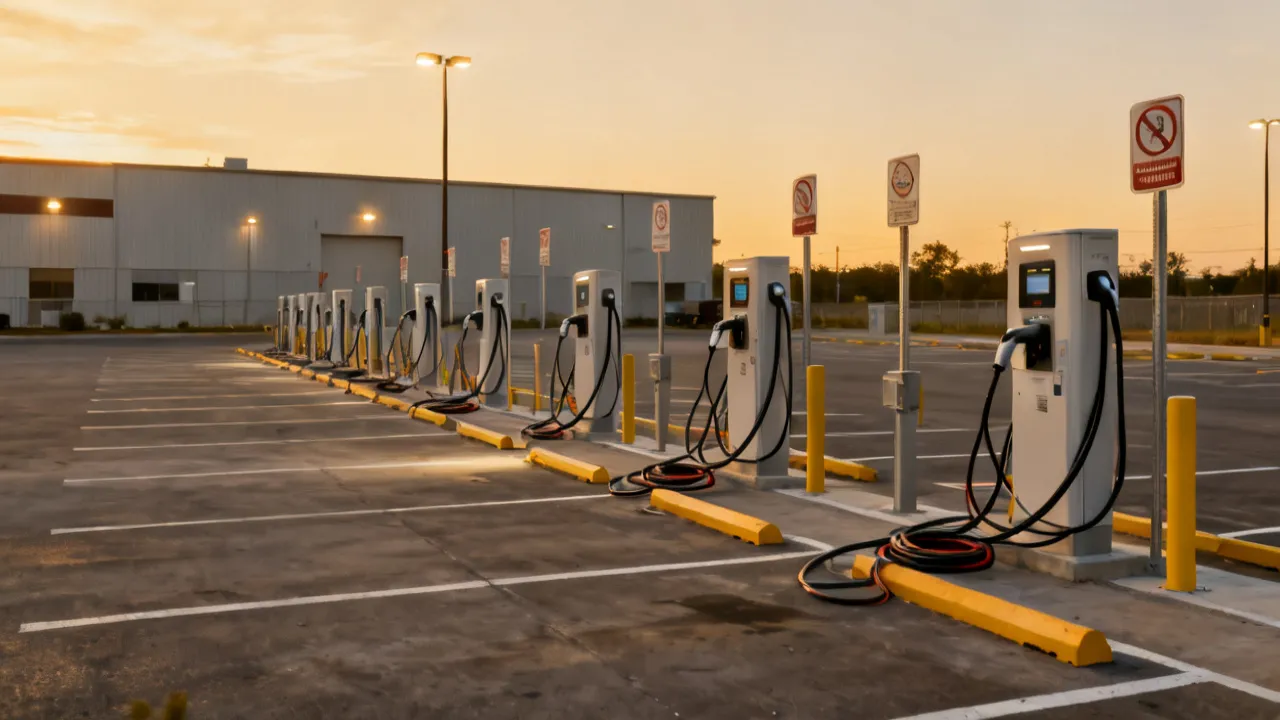
This guide explains how Commercial Electric Car Charging Points Installation projects are planned, assessed, and delivered for reliable daily uptime. It reviews key background concepts—site surveys, power supply design, safety compliance, and contractor selection—so organisations can compare solutions objectively. You’ll also find a practical requirements overview and FAQs to support commissioning decisions.
Commercial EV Charging Points: Installation Guide
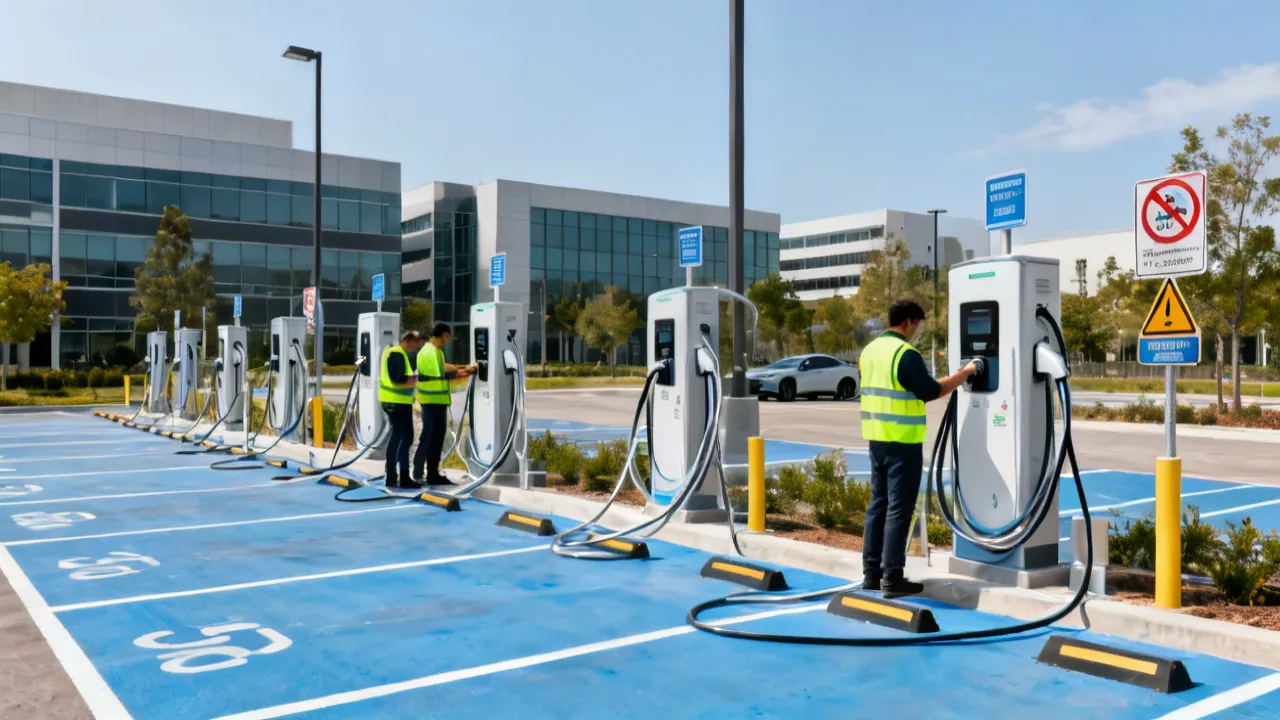
This guide explains Commercial Electric Car Charging Points Installation, covering site planning, electrical design, procurement, permitting, grid connection, and commissioning. It provides objective background on chargers, standards, and risk controls, then outlines practical requirements through comparisons, a step-by-step approach, and FAQs—helping property owners and fleet managers plan upgrades with confidence.
Commercial EV Charging Installation: Expert Guide
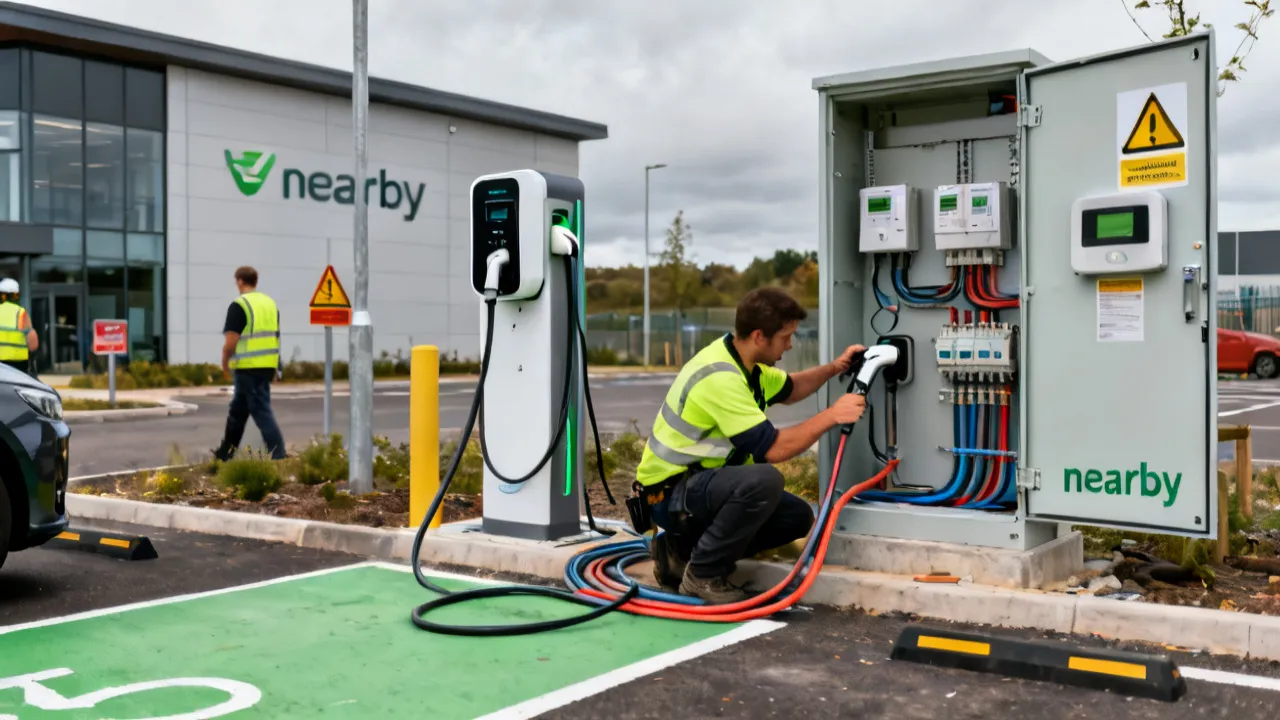
This guide explains Commercial Electric Car Charging Points Installation, from site assessment and grid connection to charger selection, civil works, compliance, and ongoing service. It reviews what matters for operators and fleet managers—power delivery, safety, uptime, and documentation—then adds a comparison table, a step-by-step install workflow, and key conditions to help you plan near reliable outcomes.
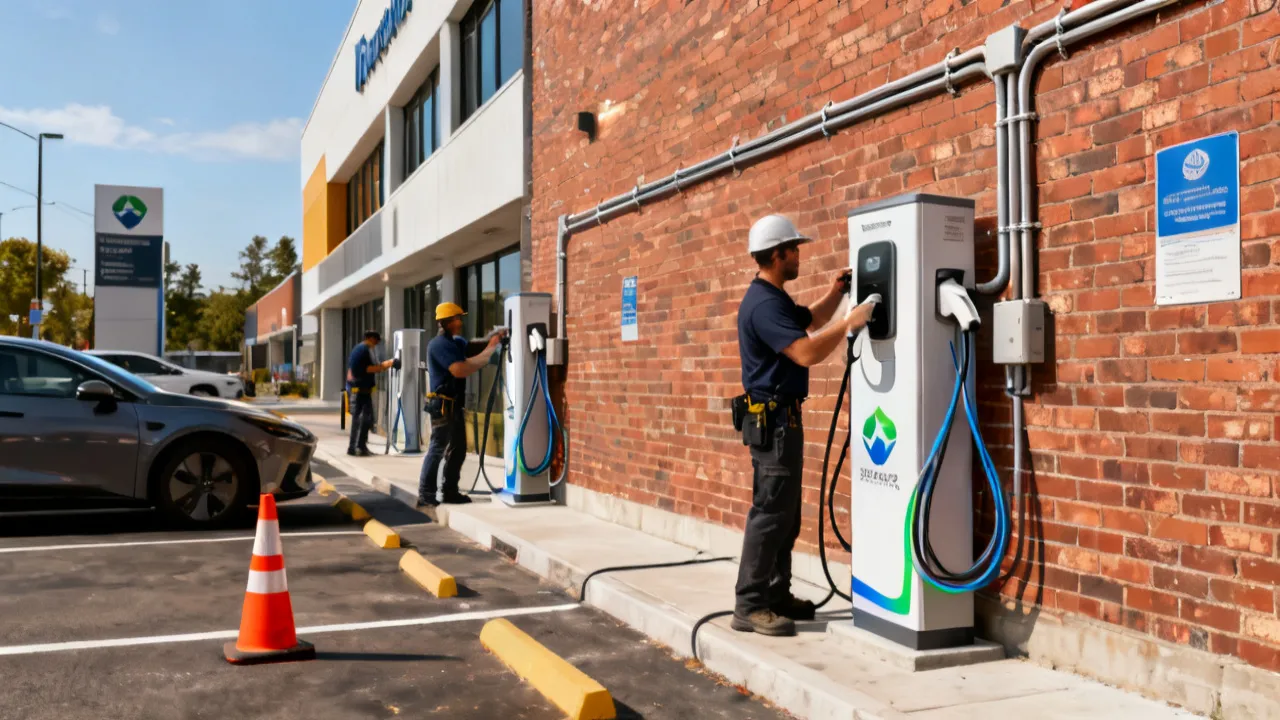
Commercial EV Charging Installation: Expert Guide and Costs
This guide explains Commercial Electric Car Charging Points Installation—from planning and compliant electrical design to contractor selection, expected costs, and operational readiness. It provides objective background on charging infrastructure, grid considerations, site surveys, and safety practices, helping businesses in nearby areas choose suitable equipment and avoid common installation mistakes.
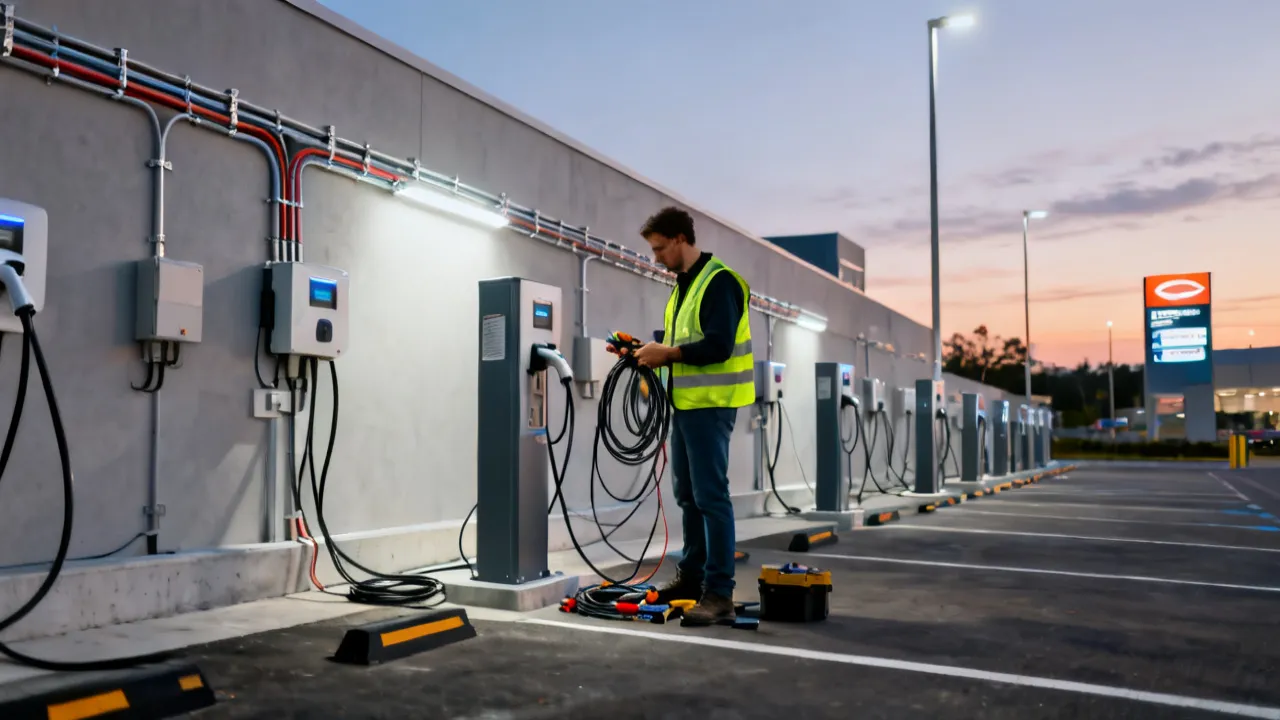
Commercial Electric Car Charging Points: Installation Guide
This guide explains Commercial Electric Car Charging Points Installation, from site assessment to power supply, safety compliance, and commissioning. It provides objective context on charging standards, typical infrastructure layers, and procurement considerations. Readers will gain a practical, expert view of what to plan before work starts, what to verify during installation, and how to reduce operational risk over the charging network’s lifecycle.
How to Install Commercial Electric Car Charging Points
This guide explains how Commercial Electric Car Charging Points Installation works for businesses, from planning and site surveys to electrical design, permitting, commissioning, and ongoing maintenance. It objectively outlines what “commercial charging points” typically include, why hardware choices matter, and which operational requirements drive total costs and timelines.
